Mastering AI Image Prompts: From Generic Keywords to Precise Visual Control
Move beyond empty buzzwords like "hyperrealistic" and "8K". Learn how art directors and creative technologists use light physics, material tactility, compositional geometry, and negative space to direct AI image models with precision.
 NEON Dance Editorial
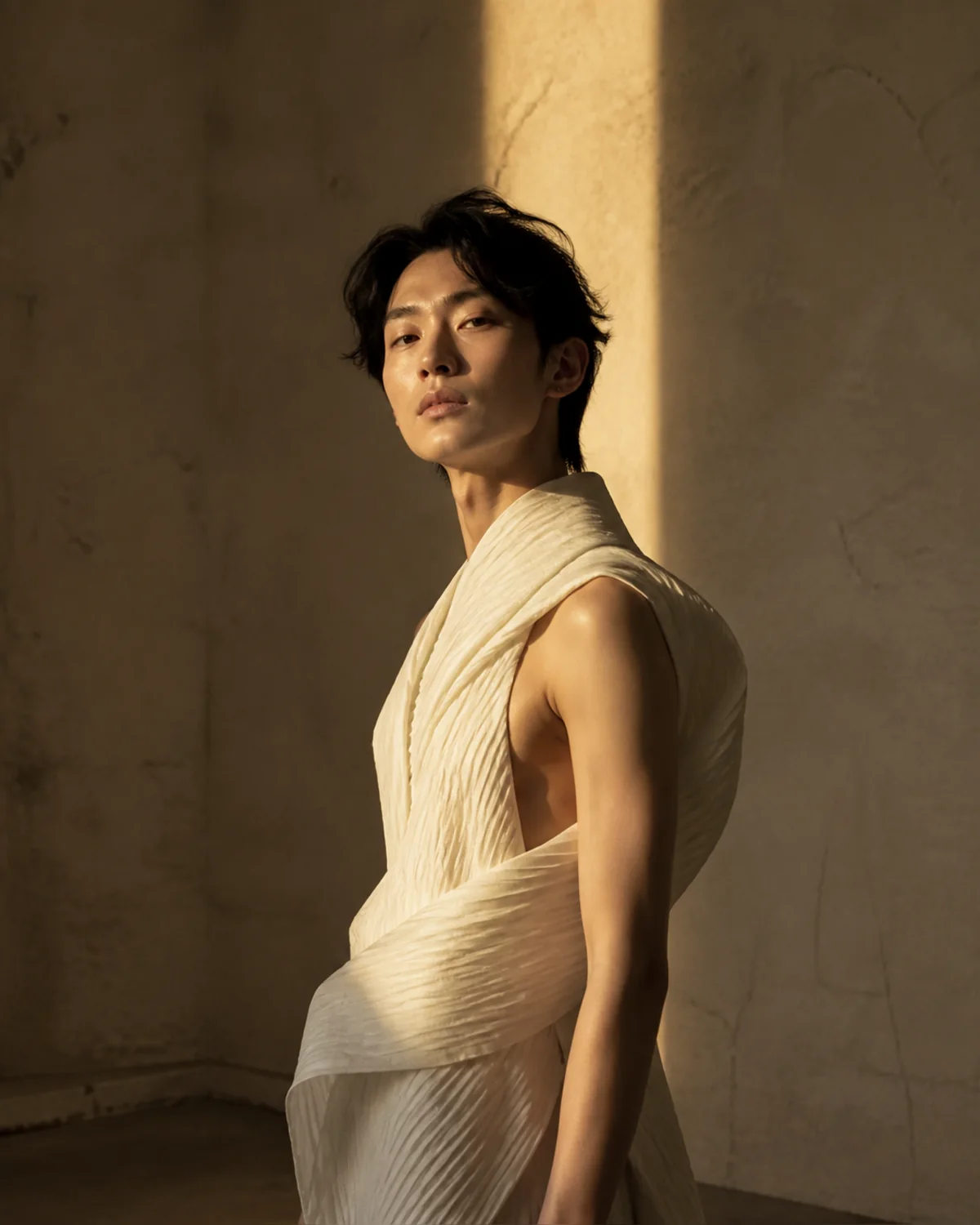
In beginner prompt collections, you will often find an endless string of buzzwords: "ultra-realistic, 8k wallpaper, masterpiece, unreal engine 5, octane render, trending on artstation". Yet anyone who has directed generative models on commercial design or editorial assignments discovers the paradox: the more empty adjectives you pile on, the more generic and plastic the output becomes.
Genuine visual authority comes from thinking like a cinematographer, lighting gaffer, and art director. Instead of asking the model for an ambiguous concept of "quality", you specify immutable physical facts: where the light originates, what materials compose the surfaces, what optical lens is framing the shot, and where negative space is preserved for layout breathing room.
1. Demystifying Prompt Buzzwords: What Actually Drives the Model?
Modern image generation models are trained on billions of visual tokens; they understand high-resolution fidelity natively. The generator does not need to be begged for "sharpness"—what it lacks is concrete artistic and architectural decision-making.
Consider the contrast between these two approaches:
- The Vague Buzzword Stack: "A stunning, luxurious, cinematic, hyper-detailed perfume bottle commercial shot, 8k, masterpiece, beautiful lighting."
- The Art Director's Brief: "A geometric, semi-translucent obsidian glass perfume bottle, centered on a wet black travertine plinth. A single hard raking light from the left casts a sharp elongated shadow across the stone. Deep amber optical refraction inside the liquid. Matte dark background with generous negative space above and to the right. No typography, no logos."
The second version succeeds because it converts subjective intent into geometry, optics, and material tactility. If the image is too dim, you adjust the light source; if the composition crowds a headline, you shift the coordinate anchor.
2. The 5-Layer Prompt Framework
For the supporting image tools in NEON Dance, prompts can be structured across five clear tiers:
[Core Subject & Gesture] + [Focal Framing & Geometry] + [Lighting Optics] + [Tactility & Micro-imperfections] + [Negative Space & Restraint]
1. Subject & Gesture
Define what is physically occurring. Avoid isolated nouns; describe pose tension, weight distribution, or dynamic stillness.
- Weak: "A woman looking at the sky."
- Strong: "A dancer in mid-breath, chin tilted upward, tendon tension visible in the neck, rim-lit hair strands catching cold daylight."
2. Composition & Aspect Ratio
Before committing text, choose your target AI Image Aspect Ratio. Framing establishes visual hierarchy:
- Perspective: Eye-level portrait, dramatic low-angle monumentality, top-down flat lay, or intimate macro crop.
- Subject Placement: Rule-of-thirds lateral bias, serene symmetrical center, or extreme asymmetric edge tension.

3. Lighting Physics
"Cinematic lighting" is an abstraction. Real lights obey physical characteristics:
- Source & Falloff: High-contrast single-source spotlight, vast diffused softbox glow, or raking dawn sunlight skimming texture.
- Color Temperature Contrasts: The tension between golden tungsten warmth and cool blue skylight shadows.
4. Material Tactility & Real-World Imperfection
The fastest way to destroy the artificial "plastic look" is to describe physical evidence of reality:
- Glass and metal: Microscopic hairline scratches, brushed satin grain, subtle condensation beads, and refraction caustics.
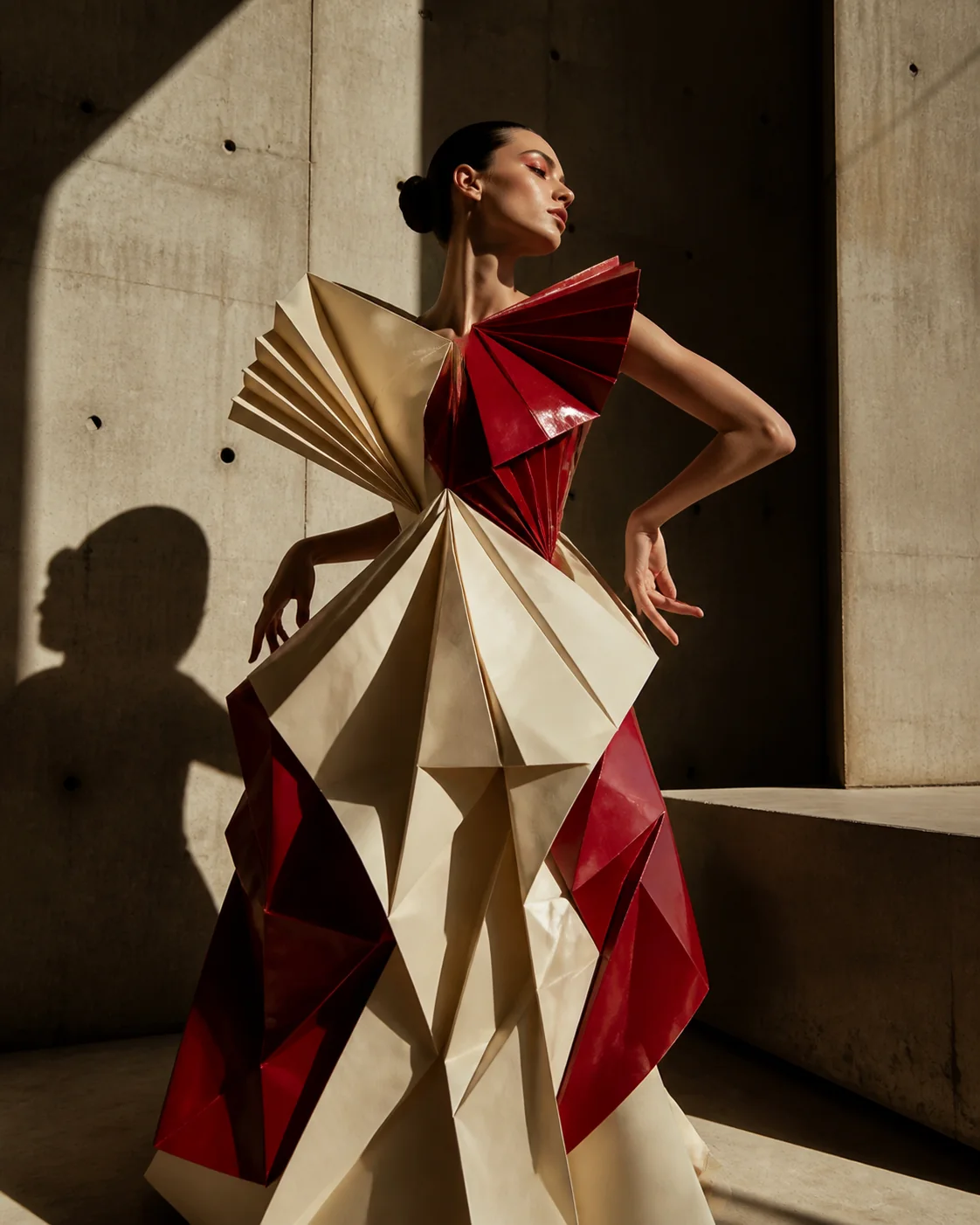
- Paper and textiles: Raw unbleached linen weave, fibrous deckle paper edges, natural creases, and tactile embossing.
- Skin: Delicate pores, subtle freckles, eye moisture catchlights, and authentic subsurface scattering.
5. Negative Space & Constraints
High-end commercial art is defined as much by what is omitted as what is shown:
- Explicit direction: "Upper third kept entirely uncluttered for typography", "Deep matte negative space on the left", "Clean studio backdrop without decorative clutter or watermark artifacts."
3. Production-Ready Prompt Recipes
Click any prompt example below to load the parameters and aspect ratio into the NEON Dance image workspace:
Recipe 1: Luxury Commercial Still Life
Recipe 2: Avant-Garde Papercraft Editorial
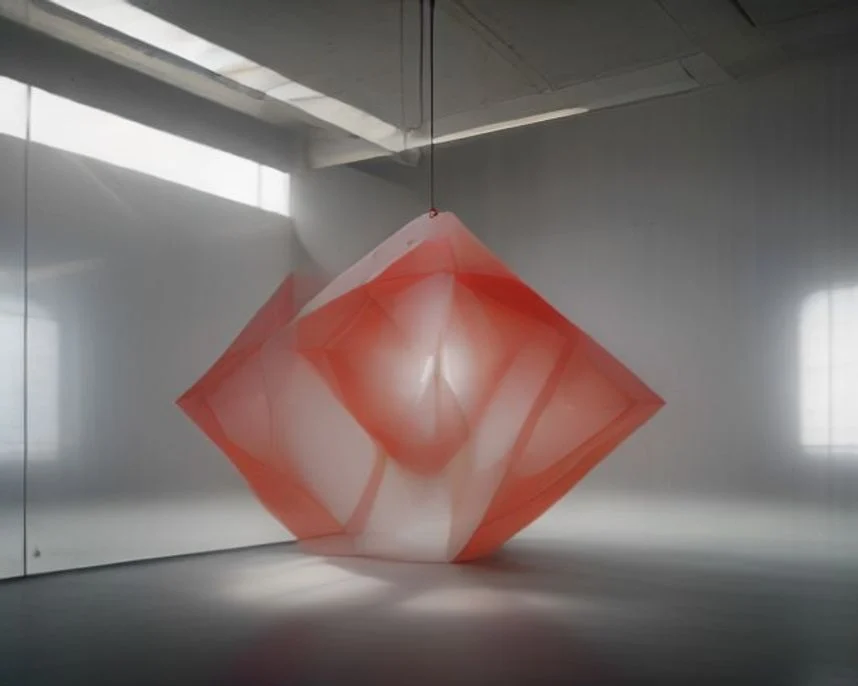
Recipe 3: Kinetic Chrome Industrial Sculpture
4. The Scientific Iteration Mindset
When an initial generation misses your vision, resist the urge to discard the prompt and start over. Treat the process like tuning optical equipment:
- Composition misaligned? Check your camera distance (macro/medium/wide) and subject coordinates (left third/centered). Calibrate the aspect ratio first.
- Surface too synthetic? Strip out all subjective praise words (masterpiece, stunning) and replace them with physical material names (brushed brass, matte porcelain, raw wool) and specific lighting hardness.
- Palette too chaotic? Restrict the scene strictly to 2–3 harmonious tones ("deep spruce green, muted bone white, with faint brass accents"), eliminating all uncalled colors.
When you treat each prompt as a physical lighting stage rather than a gamble, consistency follows.