From Stillness to Cinema: A Director’s Guide to AI Image-to-Video
Eliminate limb morphing, temporal warping, and chaotic artifacts. Learn how filmmakers and motion designers choreograph camera tracks, fluid physics, and subtle micro-movements to bring still art to life.
 NEON Dance Editorial
For many creators experimenting with AI video, the initial image-to-video workflow feels like a gamble: you feed the engine an immaculate still portrait or architectural photograph, hit generate, and within two seconds the subject's face melts, the architecture turns to rubber, and the serene mood collapses into uncanny valley chaos.
This failure stems from a fundamental misunderstanding: applying static text-to-image prompting habits to dynamic temporal diffusion.
When working in an image-to-video pipeline, your uploaded image has already established Keyframe 0: identity, lighting geometry, palette, and texture are locked. Your role is no longer a concept artist filling a blank canvas—you are now the cinematographer and director, tasked with commanding physical fluid dynamics and precise optical camera movements over the next four to eight seconds.
1. The 3 Pillars of Motion Prompting
A production-grade motion prompt commands three distinct dimensions:
[Camera Choreography] + [Subject Micro-Dynamics] + [Atmospheric Fluid Physics]
1. Camera Choreography
Always prioritize camera movement over subject locomotion. Driving the motion through the camera lens is the safest, most cinematic way to introduce vitality without tearing latent geometry:
- Slow Dolly In / Push-in: Draws the viewer gradually toward the subject’s gaze or intricate details, creating gravitas and emotional resonance.
- Smooth Lateral Parallax Track: Moves horizontally on a track, creating rich depth between foreground silhouettes and receding horizons.
- Organic Handheld Breathing: A subtle, almost imperceptible human drift that breaks the cold rigidity of computer-generated graphics.
- Rule of Restraint: Avoid compound camera stunts ("spinning 360 while swooping down"). Complex rotational transforms are the primary cause of warped edges and distorted geometry.
2. Subject Micro-Dynamics
Do not ask a static portrait to sprint, violently turn around, or perform acrobatics. Without an underlying 3D skeletal rig, large spatial transformations inevitably cause limbs to multiply:
- High-Fidelity Micro-Motions:
- "Model's gaze slowly shifts from the far distance to engage directly with the lens."
- "Subtle rhythmic breathing visible in the shoulders; a faint, restrained smile softens the lips."
- "Individual strands of hair lift gently in a light crosswind while bodily posture remains grounded."
3. Atmospheric Fluid Physics
When the primary subject remains poised and stable, animating the surrounding physical environment delivers pure cinematic magic:
- Air & Particles: Floating Tyndall dust motes in sunbeams, breath condensing in winter air, drifting embers, or falling snow flurries.
- Liquids & Caustics: Subtle ripples expanding across wet pavement, raindrops trailing down window glass, or pulsating reflections on water.
- Fabric Simulation: Heavy wool coats or lightweight silk scarves reacting naturally to gravity and ambient drafts.

2. Three Field-Tested Director's Blueprints
Inside NEON Dance's Image-to-Video Studio, load your initial high-resolution still and use these motion prompts:
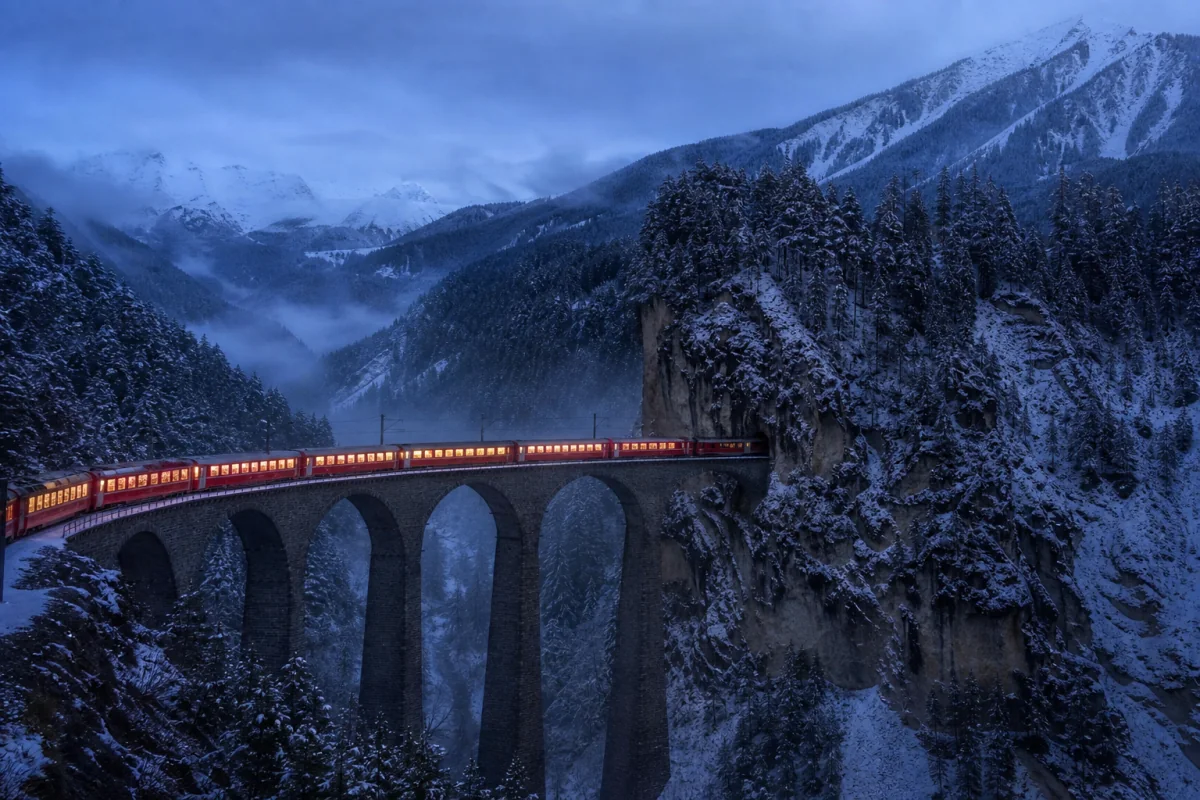
Blueprint 1: The Alpine Locomotive (Widescreen Landscape)
- Directorial Intent: Environmental physics combined with a slow, deliberate camera push.
- Production Prompt:
Slow, cinematic camera push-in toward the train. Thick white steam plumes billow organically from the locomotive into the cold night air, drifting backward. Carriage window warm amber lights flicker gently against the snow. Keep the mountain silhouette and rail geometry locked and stable. No abrupt camera cuts, smooth 24fps motion cadence.
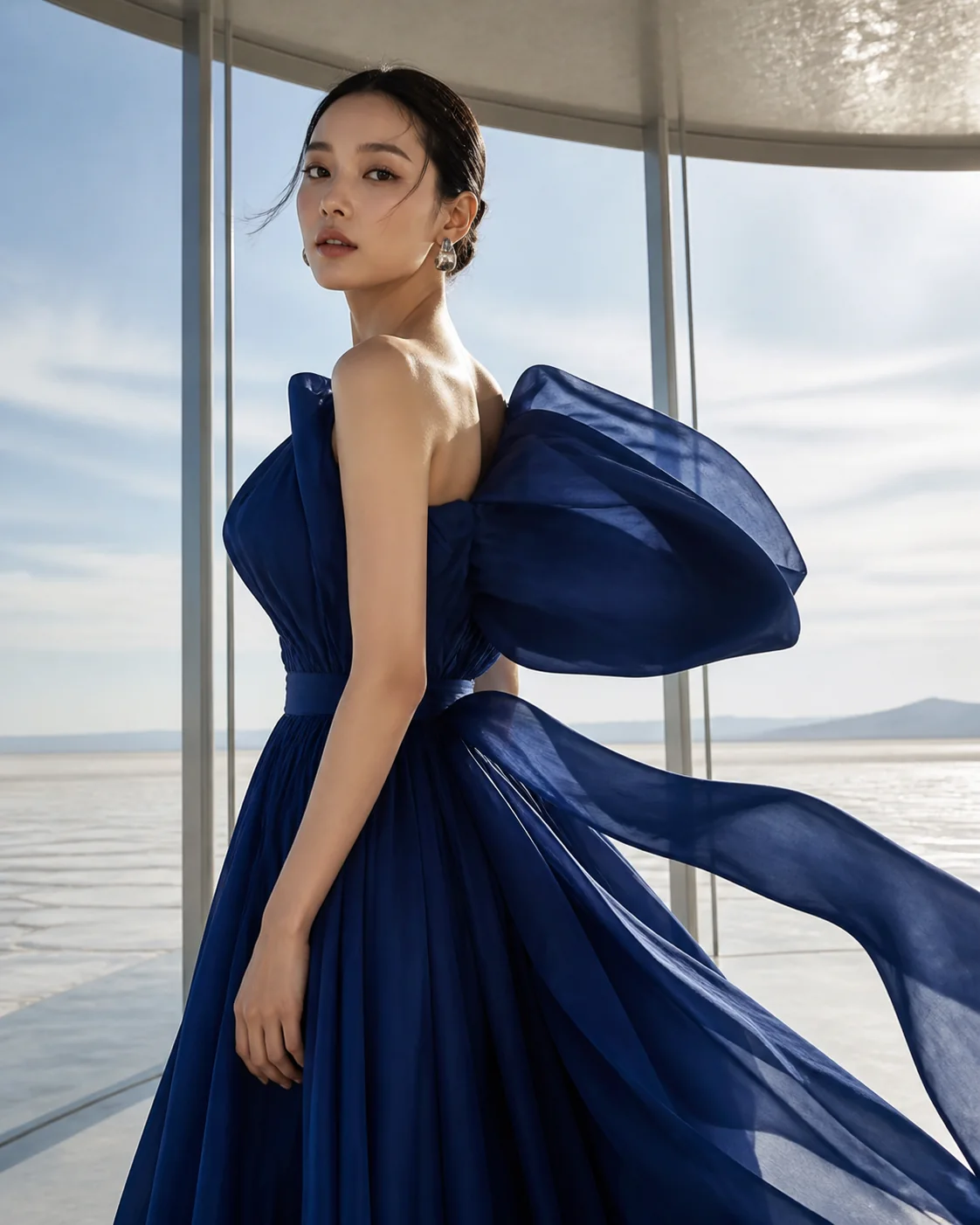
Blueprint 2: Haute Couture Editorial (Vertical Portrait)
- Directorial Intent: Anchor facial symmetry while animating organic fabric flutter and eye focus.
- Production Prompt:
Lock camera on the subject’s face. A delicate breeze naturally sweeps stray hairs across her cheek. The subject breathes gently, eyes slowly shifting focus toward the lens with a subtle expression change. Keep facial anatomy, ear, and jawline strictly consistent. Soft rim light subtly catching moving silk fabric.
Blueprint 3: Miniature World Macro (Macro Parallax)
- Directorial Intent: Discovering micro-details through shallow depth-of-field movement.
- Production Prompt:
Macro tracking shot gliding slowly from right to left across the miniature market stalls. Tiny neon signage pulses softly, small glowing ember particles drift upward through the night air. Shallow depth of field with creamy bokeh shifting in the background. Stable miniature objects, no morphing artifacts.
3. The Director's Troubleshooting Matrix
| Symptom | Root Cause | Surgical Fix |
| :------------------------------------- | :----------------------------------------------------- | :------------------------------------------------------------------------------------------------------------------------------------ |
| Facial warping / Extra fingers | Demanding excessive head rotation or sudden gestures | Add the anchor clause: Facial structure remains strictly identical to the source image; static head pose with gentle gaze tracking. |
| Jelly wobble / Rubber architecture | Unrestricted camera velocity or over-stuffed prompt | Instruct: Slow, locked tripod shot with fixed focal length; static rigid architectural surfaces. Remove conflicting motion clauses. |
| Spontaneous phantom objects | Latent diffusion hallucination filling peripheral void | Specify: Strictly preserve the original environment and backdrop. Zero added figures or foreign objects. |
Treat every still frame as a cinematic prelude. When you direct motion with restraint and physical respect, still pixels awaken into genuine art.